Our Projects

A selection of the competitions, hackathons and platforms we have designed, built and operated with research labs, industry leaders and international conferences.

Competitions

Challenges we designed, built and ran, for conference competition tracks and for industrial contests with large research grants.

Competition·2025
Survival AnalysisFinanceBenchmark

FinSurvival Challenge

Advancing survival modeling for financial transactions

Survival modeling is the statistical prediction of the time until a specific event occurs, and it holds immense value across the financial sector. It is used to estimate the time until loan repayment or default and to predict portfolio churn, which gives critical insights for risk management, strategic planning and customer retention. Winning teams presented their solutions at the ICAIF'25 conference.

With ICAIF'25 Conference · ChaLearn · Ava Labs · Rensselaer Polytechnic Institute

$1,750 prize poolWebsiteCompetition
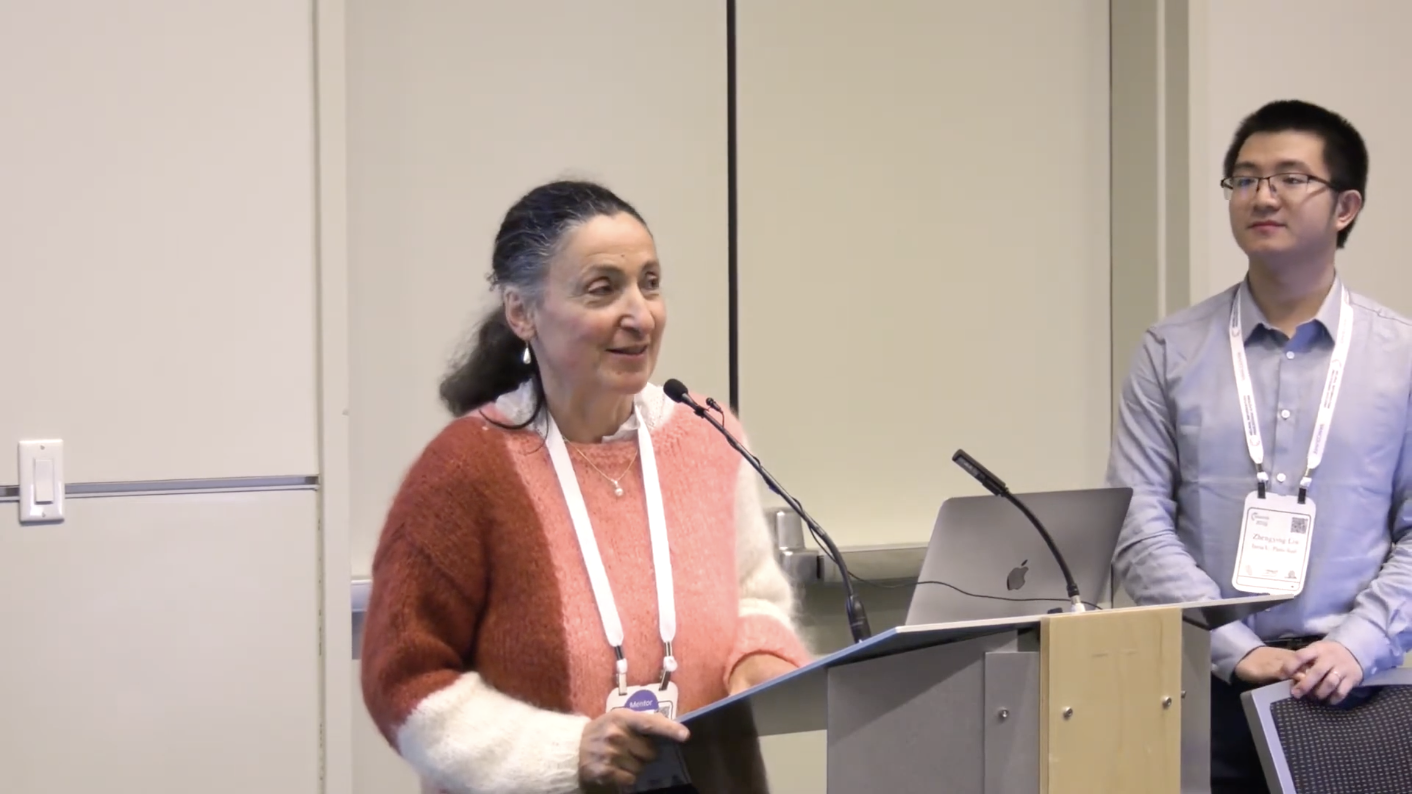
Award ceremony at ICAIF'25

Award ceremony at ICAIF'25 Award ceremony at ICAIF'25

Competition·2024
Cooperative AIAgentic AILLM Agents

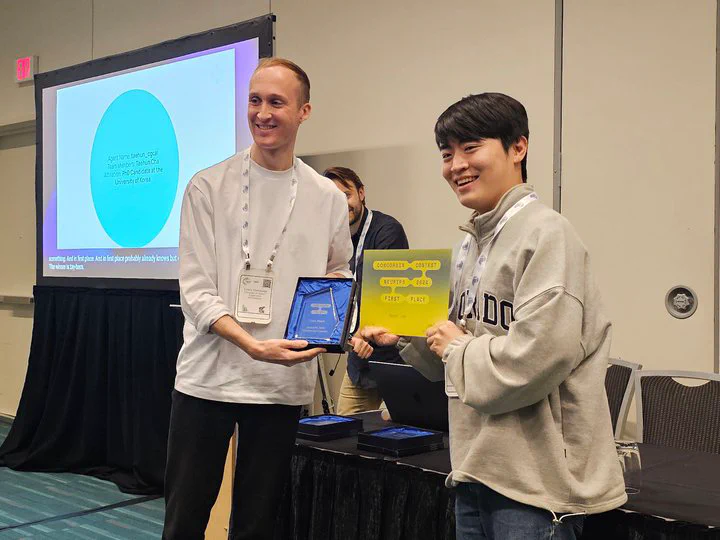
NeurIPS Concordia Contest

Cooperative intelligence for AI agents

A NeurIPS 2024 competition in the field of cooperative AI, focused on the cooperative intelligence of AI systems, that is, the ability of an agent to achieve its goals in ways that also promote social welfare, across diverse environments and partners. The scenarios test skills such as promise-keeping, negotiation, reciprocity, reputation, partner choice, compromise and sanctioning.

With Google DeepMind · Cooperative AI Foundation

$10,000 prize poolHomepageCompetition
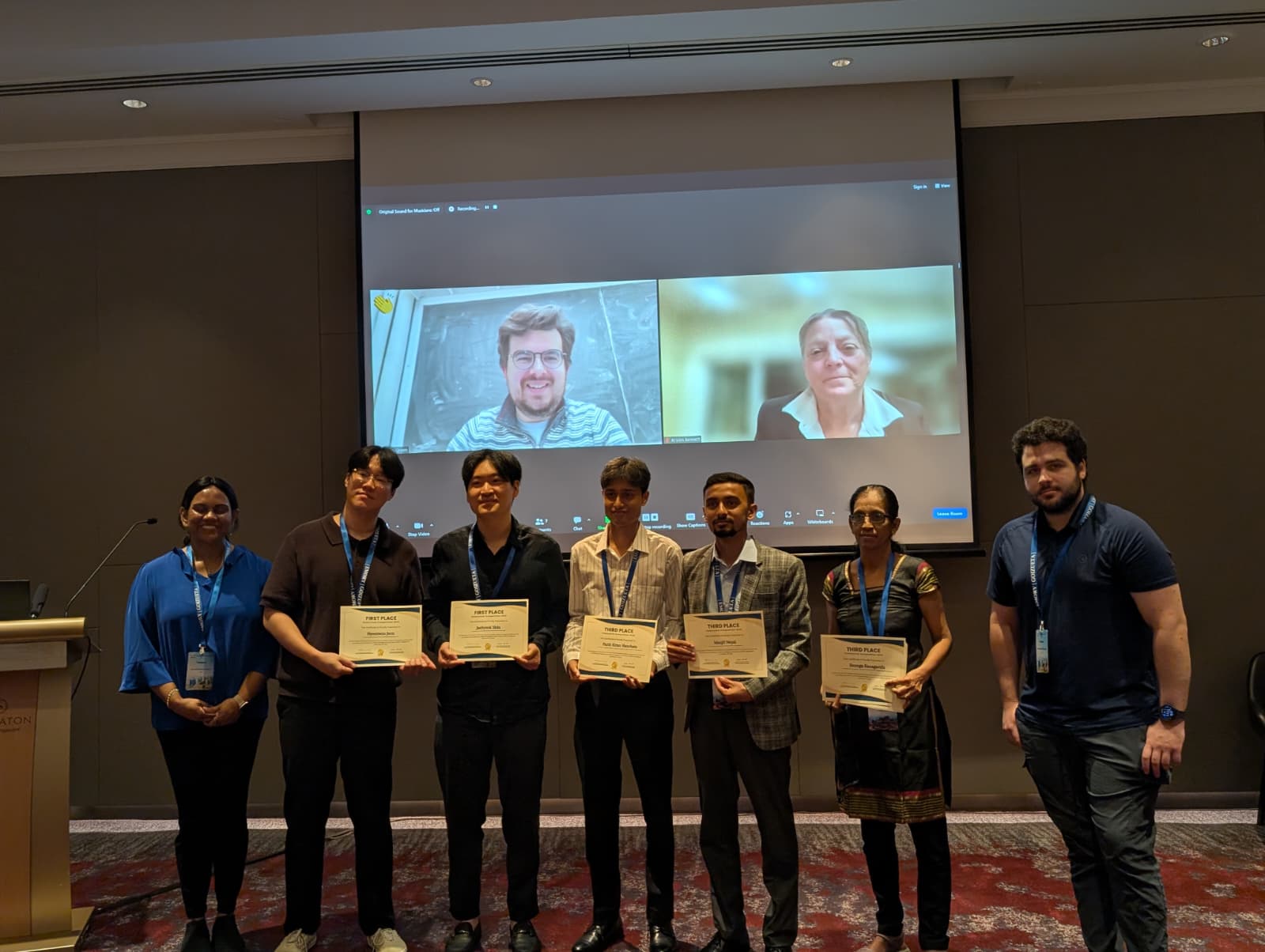
First place award at NeurIPS 2024

First place award at NeurIPS 2024 First place award at NeurIPS 2024

Competition·2023–2025
High Energy PhysicsUncertainty-Aware AICosmology

FAIR Universe – HiggsML Uncertainty Challenges

Handling systematic uncertainties in fundamental science

FAIR Universe is building a large-compute-scale AI platform to host large scientific datasets, models and machine learning competitions, in order to drive forward discoveries in high energy physics and cosmology. Funded by the US Department of Energy, the project ran a sequence of four challenges, from a toy problem up to a NeurIPS 2024 competition, that brought together researchers from physics and from machine learning around the question of systematic uncertainty.

With Lawrence Berkeley National Laboratory · Université Paris-Saclay · University of Washington · ChaLearn

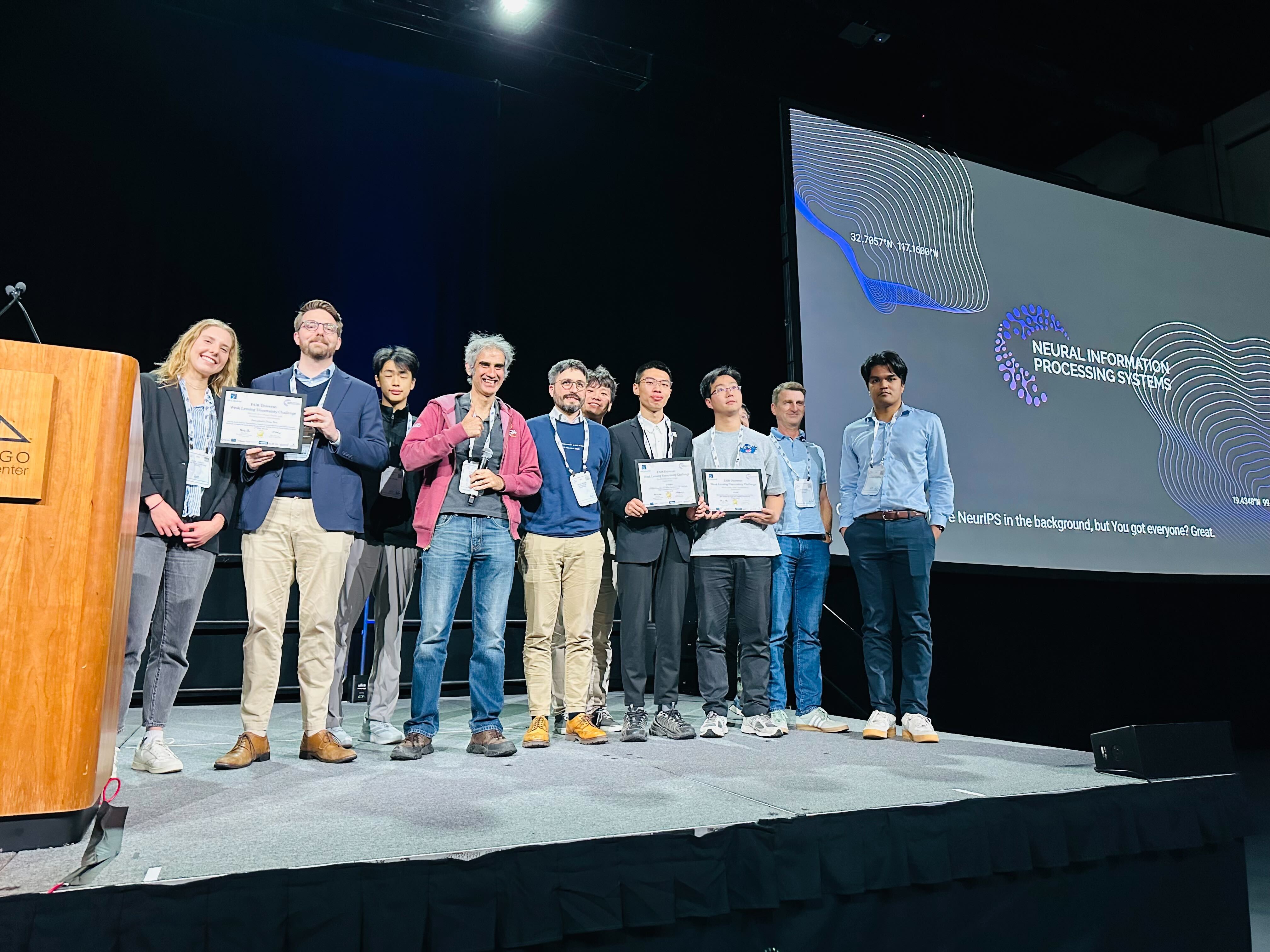
FAIR Universe Team at NeurIPS 2025

The collaboration

The FAIR Universe project brings together scientists from Lawrence Berkeley National Laboratory, Université Paris-Saclay, the University of Washington, and ChaLearn, a non-profit that organizes challenges to stimulate research in machine learning. The project is funded by the US Department of Energy.

The initial focus is on discovering and minimizing systematic uncertainties in High Energy Physics, through a sequence of challenges that bring together researchers across physics and machine learning.

The challenge series

1. Toy Challenge (October 2, 2023)

A first toy challenge was released on the Codabench platform at the start of the project, designed to test the platform and provide a simple example for the community to follow. A toy dataset was created to illustrate the types of analyses performed on real data from particle accelerators.

Competition website

2. Particle Physics challenge trial (November 29, 2023)

A hackathon was hosted at the Artificial Intelligence and the Uncertainty Challenge in Fundamental Physics workshop. FAIR Universe released a trial version of a challenge using detailed physics simulations of accelerator data.

Competition website

3. HiggsML Uncertainty Pilot Competition (March 12, 2024)

A pilot version of the HiggsML Uncertainty Competition was launched for participants. This trial competition focused on involving participants to refine the competition by updating the task, dataset and metric in a feedback loop.

Competition website

4. The challenge of handling uncertainties in fundamental science (NeurIPS 2024)

The full challenge, FAIR Universe: the challenge of handling uncertainties in fundamental science, was accepted at the NeurIPS 2024 Competition Track and launched in August 2024.

Competition website

Credits

Benjamin Nachman, Chris Harris, Sascha Diefenbacher, Steven Farrell, Wahid Bhimji, Jordan Dudley, Elham E Khoda, Shih-Chieh Hsu, Yulei Zhang, Yaun-Tang Chou, Isabelle Guyon, Ihsan Ullah, David Rousseau, Ragansu Chakkappai, Aishik Ghosh.

FAIR Universe Team at NeurIPS 2025 FAIR Universe Team at NeurIPS 2025

Competition·2023
Reinforcement LearningPower GridEnergy Transition

L2RPN 2023

Learning to Run a Power Network

The L2RPN challenge addresses climate change by promoting the energy transition to renewable sources like solar and wind. Participants developed AI agents able to operate a simulated power grid, in a protocol close to reinforcement learning, and competed for a research grant.

With RTE (Réseau de Transport d'Électricité) · Région Île-de-France

€500,000 research grantCompetitionAnalysis paper
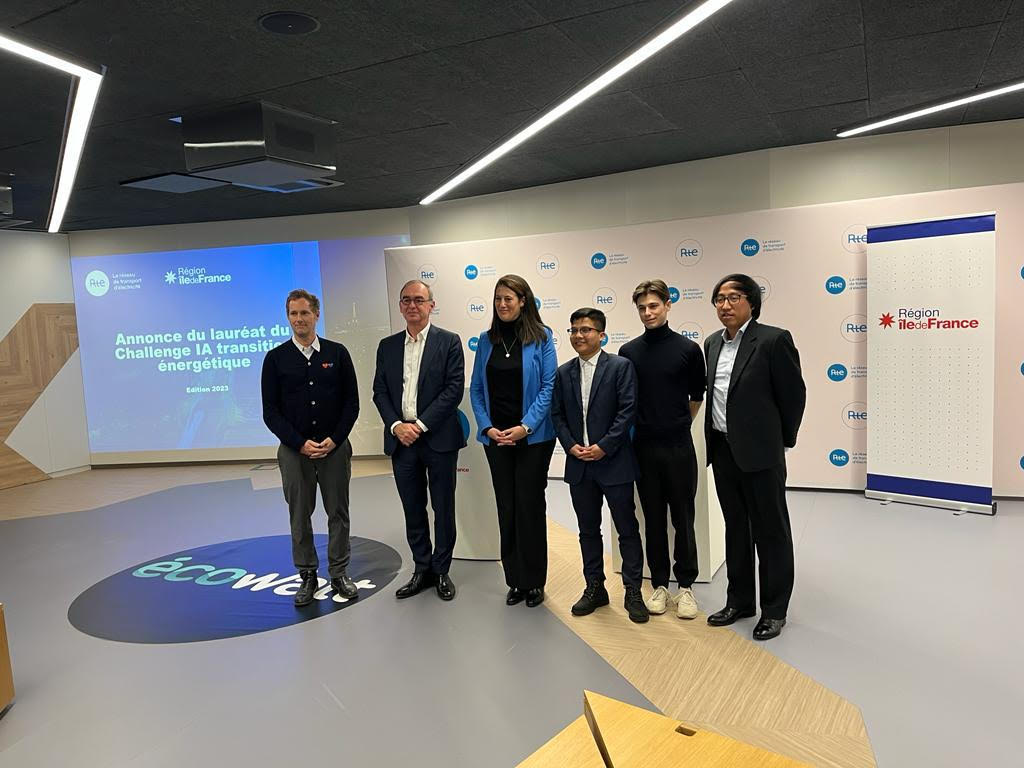
Announcement of the L2RPN 2023 winner with RTE and Région Île-de-France

Announcement of the L2RPN 2023 winner with RTE and Région Île-de-France Announcement of the L2RPN 2023 winner with RTE and Région Île-de-France

Competition·2022
Meta-LearningFew-Shot LearningTransfer Learning

Cross-Domain MetaDL

Any-way any-shot cross-domain few-shot learning

Part of the NeurIPS 2022 Competition Track, Cross-Domain MetaDL asked participants to meta-learn a model that can quickly learn image classification tasks from a variety of domains, with any number of classes (from 2 to 20) and any number of examples per class (from 1 to 20). It ran on 30 datasets from 10 domains taken from the Meta-Album collection, with blind testing on unseen datasets in the final phase.

With NeurIPS 2022 Competition Track · ChaLearn

€4,000 prize pool across 5 leaguesCompetitionReportMetaDL series

Competition overview

Meta-learning aims to leverage experience from previous tasks to solve new tasks efficiently. Lately, meta-learning has contributed a lot of progress in few-shot learning for image classification. However, evaluation protocols have had two common drawbacks:

  • Even when evaluated on multiple domains (insect classification, texture classification, satellite images, and so on), models meta-trained on a given domain are meta-tested on the same domain, which is called within-domain few-shot learning.
  • In N-way k-shot problems, the number of ways N (classes) and shots k (training examples per class) is usually fixed.

Cross-Domain MetaDL is the continuation of our NeurIPS 2021 MetaDL competition, which tackled the within-domain problem in a fixed 5-way 5-shot setting. The novelties are:

  • Protocol: still code submission with one-chance blind testing on new datasets in the final phase, but closer to the real-world scenario where data comes from different domains and not always with the same number of classes and examples per class.
  • Data: an extension of the Meta-Album dataset we started putting together the year before: 30 image classification datasets from 10 domains, uniformly formatted as 128×128 RGB images carefully resized with anti-aliasing filters.

Prizes

The €4,000 prize pool was distributed among 5 different leagues:

  • Free-style league: submit a solution obeying the basic challenge rules (pre-trained models allowed).
  • Meta-learning league: submit a solution that meta-learns from scratch (no pre-training allowed).
  • New-in-ML league: for participants with fewer than 10 ML publications, none ever accepted to the main track of a major conference.
  • Women league: a special league to encourage women, who rarely enter challenges.
  • Rarely represented country league: for participants from outside the top 10 most represented countries in challenge participation.

Entering multiple leagues was permitted. Top-ranking participants also received a certificate and were invited to co-author the post-challenge analysis paper published in the NeurIPS proceedings of the competition track, along with travel awards distributed on merit and need.

Phases

  • Public phase (2 weeks): the starting kit and 10 public datasets were released so participants could familiarize themselves with the problem.
  • Feedback phase (8 weeks): participants submitted solutions and received feedback on 10 hidden datasets, on 10 identical workers (4 CPU cores, 1 Tesla T4 GPU, 16 GB RAM, 120 GB storage each).
  • Final phase (4 weeks): the last submission of each participant was blind-tested on 10 new hidden datasets to rank participants and select winners.

Public phase started June 15, 2022; feedback phase July 1; final phase September 1; winners were notified between October 1 and 15, 2022.

Results

LeagueTeamAverage Normalized AccuracyPrize
Free-styleMetaBeyond0.699 ± 0.007400 EUR
Free-styleEmmanuelPintelas0.682 ± 0.007250 EUR
Free-styleCDML0.646 ± 0.007150 EUR
Meta-learningmetaCD20.283 ± 0.007400 EUR
Meta-learningCDML0.265 ± 0.006250 EUR
New-in-MLmetaCD20.566 ± 0.007400 EUR
New-in-MLMetaBeyond0.699 ± 0.007250 EUR
WomenMetaBeyond0.699 ± 0.007400 EUR
Rarely represented countryEmmanuelPintelas0.682 ± 0.007400 EUR
Rarely represented countrymetaCD20.566 ± 0.007250 EUR
Rarely represented countryCDML0.646 ± 0.007150 EUR

Credits

Dustin Carrión-Ojeda, Ihsan Ullah, Sergio Escalera, Isabelle Guyon, Felix Mohr, Manh Hung Nguyen, Joaquin Vanschoren.

Competition·2020
Predictive MaintenanceTime SeriesAeronautics

AI4Industry Challenge

Predictive maintenance from aeronautical data

An ambitious time series regression contest on aeronautical data for predictive maintenance, where gradient boosted tree methods excelled. The winning team, Aquila Data Enabler, won a research grant and started a collaboration with Dassault Aviation to pursue the research and deploy their solution on production systems.

With Dassault Aviation · Région Île-de-France

€500,000 research grantPress releaseICMLA paper
Award ceremony at Dassault Aviation

Award ceremony at Dassault Aviation Award ceremony at Dassault Aviation

Competition·2019–2020
AutoMLDeep LearningMulti-Domain

AutoDL Challenge Series

Automated deep learning across domains

A series of Automated Machine Learning (AutoML) competitions applied to the various domains where deep learning excels: image, video, text, speech and tabular data. Participants submitted code that had to train and predict on unseen datasets without any human intervention. The series was hosted at NeurIPS, ACML, IJCNN and ECML PKDD, with prizes donated by 4Paradigm.

With ChaLearn · 4Paradigm

€19,500 prize poolWebsite
AutoDL workshop at NeurIPS 2019

AutoDL workshop at NeurIPS 2019 AutoDL workshop at NeurIPS 2019

Hackathons

Short-format events, from the problem design and the dataset preparation to a live leaderboard on the day.

Hackathon·2026
Wind PowerTime Series ForecastingEnergy

Wind Forecast EDF R&D Hackathon

Regional wind power forecasting in France

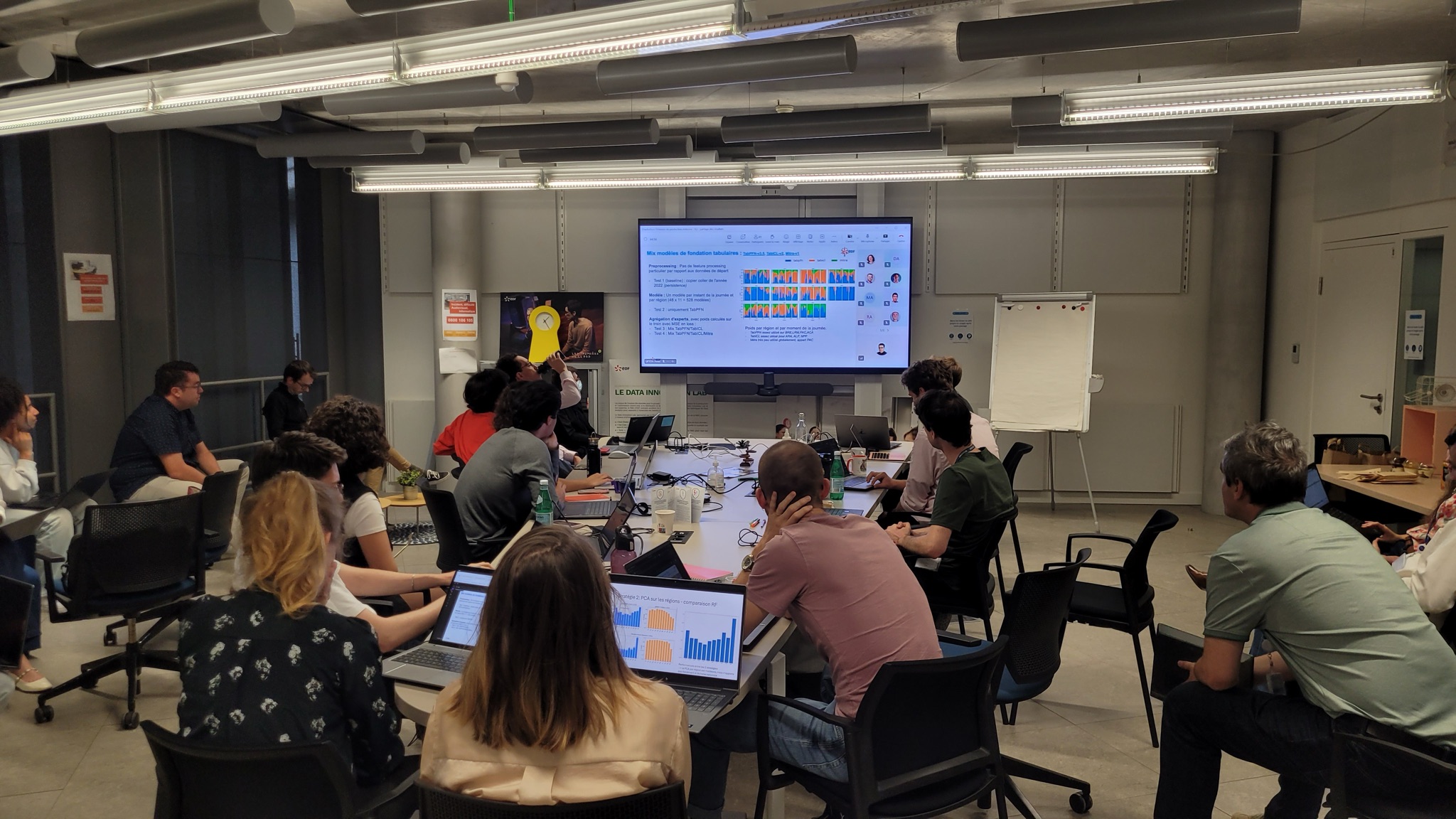
A hackathon held in September 2026 on intraday wind power forecasting for each region of metropolitan France. Starting from regional weather forecasts, participants tried to beat ReEF, the regression model EDF uses in production for its renewable forecasts.

With EDF R&D

Teams presenting their results

The task

Participants received weather forecasts at 30-minute resolution for each administrative region of metropolitan France, and had to predict the regional wind power production for the intraday horizon.

Why it matters

The power system has to keep supply and demand balanced at every horizon, from intraday to long term, and wind and solar output is hard to predict. As renewables take a bigger share of European generation, forecast errors weigh more on the decisions made at each of these horizons.

Today, several operational entities of EDF (DOAAT, SEI, Enedis) rely on ReEF (Renewable Energy Forecasts), a model built by EDF R&D on multilinear regression, for their daily solar and wind forecasts. ReEF served as the baseline, and the question was simple: can other kinds of models lower the forecast error, region by region and for France as a whole?

Teams presenting their results Teams presenting their results

Hackathon·2026
Combinatorial OptimizationHeat NetworksEnergy

EDF Challenge Data Science 2026

Designing profitable urban heat networks

The 2026 edition of the EDF data science challenge, following the 2025 hackathon. Teams had to find, in under 2 minutes, a heat network layout that maximizes profit on city-scale graphs where exact solvers are too slow.

With EDF (Électricité de France)

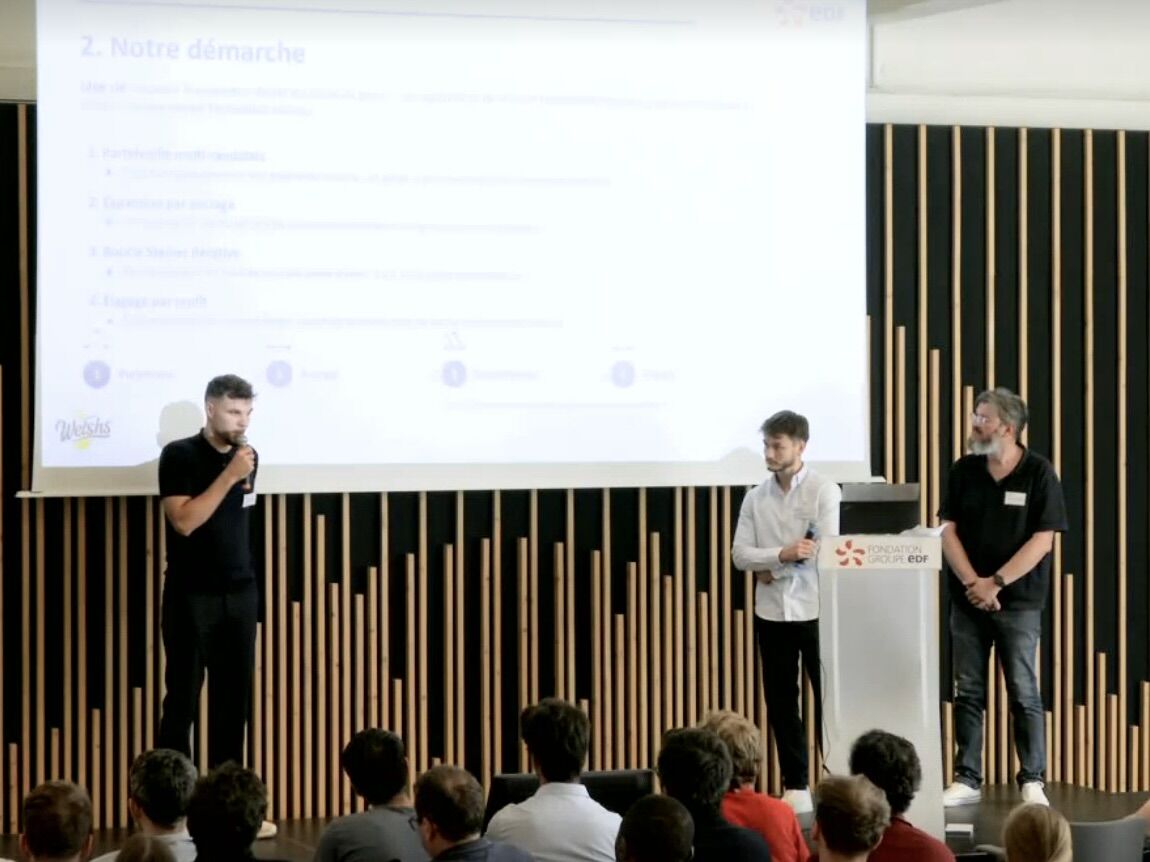
A team presenting its approach

The task

Participants had to design the most profitable heat network for a given area. The area is a graph: a producer with a maximum capacity, buildings that can be connected, and street intersections. Each potential pipe has a construction cost proportional to its length, and each connected building brings revenue proportional to its demand. The question is which subset of pipes and customers to keep.

Why it is hard

Heat networks are one of the main levers to decarbonize cities, but they need large upfront investments, so their layout has to make economic sense. On a small neighborhood, the problem can be solved exactly as a mixed-integer linear program. At the scale of a metropolis, with thousands of nodes and tens of thousands of possible pipes, the solver takes far too long, while planners need scenarios in a few minutes.

Teams had less than 2 minutes per instance to get as close as possible to the optimum. They could use heuristics, graph reduction, machine learning to pre-select promising customers or pipes, or relaxed versions of the problem to guide the search. The winner was the team with the highest total profit over all test instances.

A team presenting its approach A team presenting its approach

Hackathon·2025
Smart ChargingPrice ForecastingEnergy

EDF Hackathon 2025

Price forecasting for smart charging

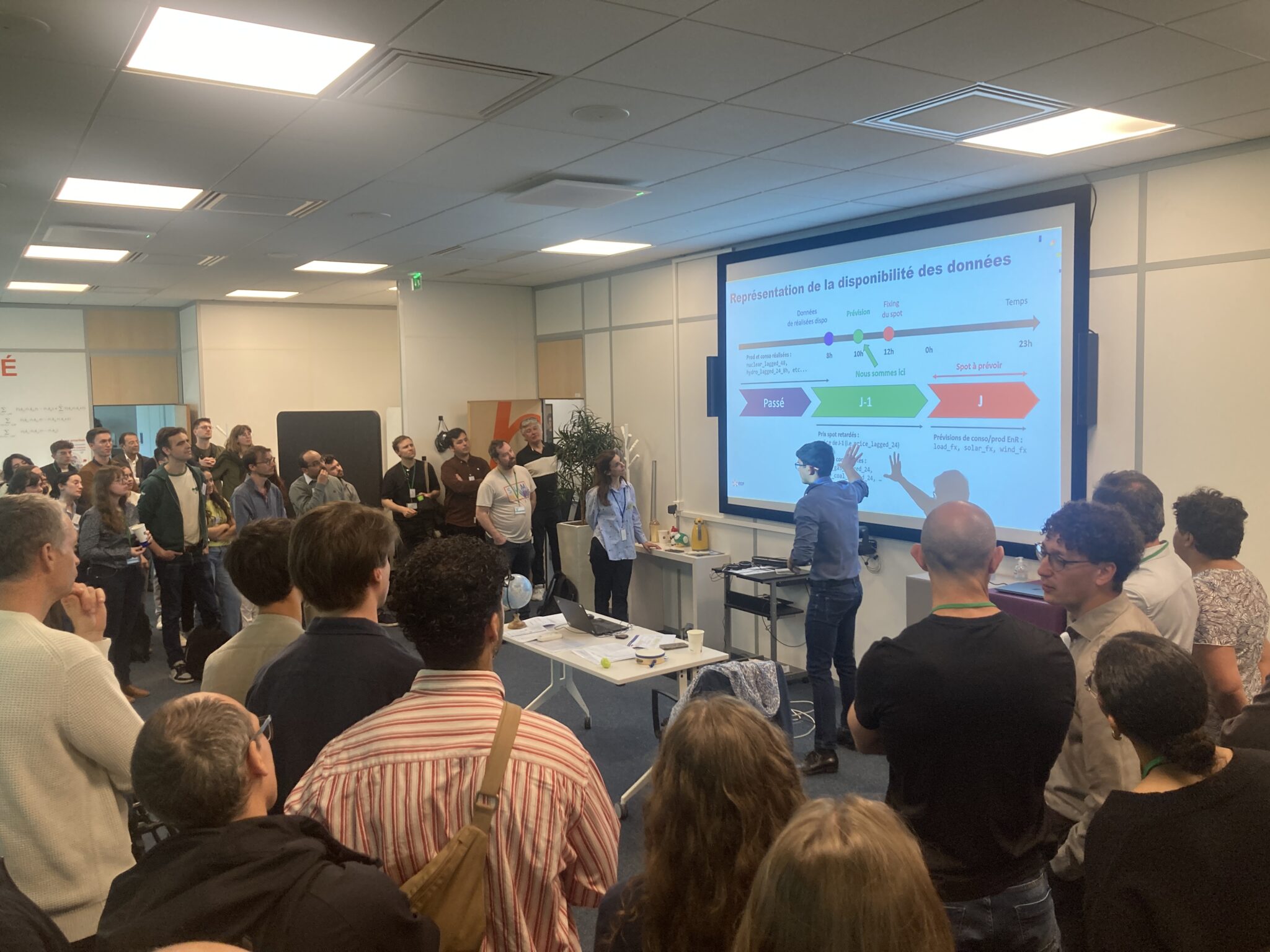
Électricité de France held a one-day hackathon on May 20th, 2025. More than 120 participants competed to find the best price forecasting method in order to optimize electric car charging.

With EDF (Électricité de France)

120+ participants
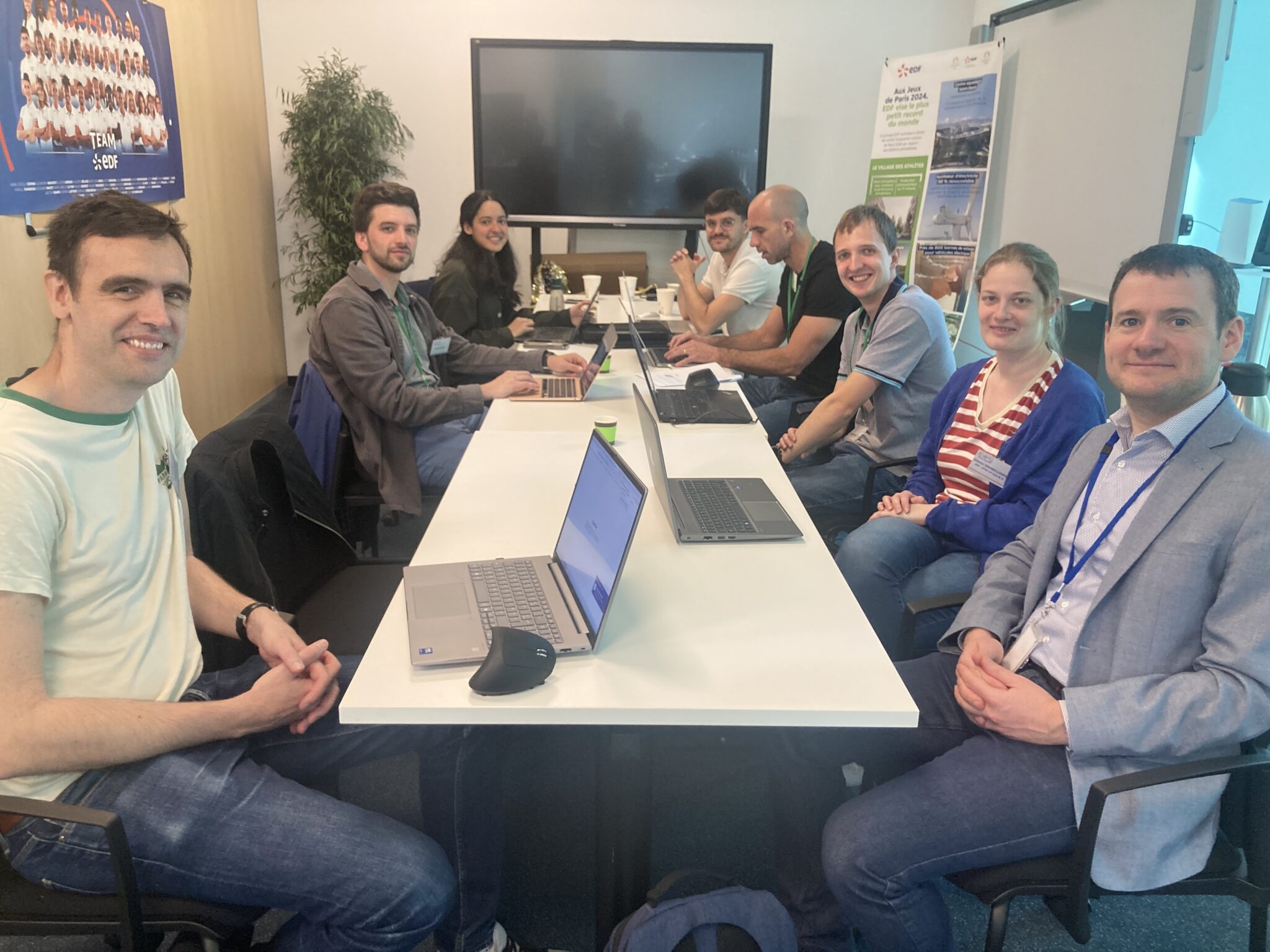
The organizers

Introductory speech Introductory speech

The organizers The organizers

Platform & Projects

The tools and research projects we build and contribute to, beyond individual challenges.

Platform·Ongoing
Open SourceBenchmarksCompetitions

Codabench

The open-source platform for AI benchmarks and competitions

Codabench is a web-based platform for organizing scientific challenges and benchmarks in artificial intelligence, where algorithms compete on tasks in fields like medicine, physics, linguistics, economics and ecology. We are core contributors to the project, and we deploy and operate dedicated instances for our clients.

With ChaLearn · LISN, Université Paris-Saclay

80,000 users · 1,500 public competitionsPlatformSource codeDocumentationWhite paper
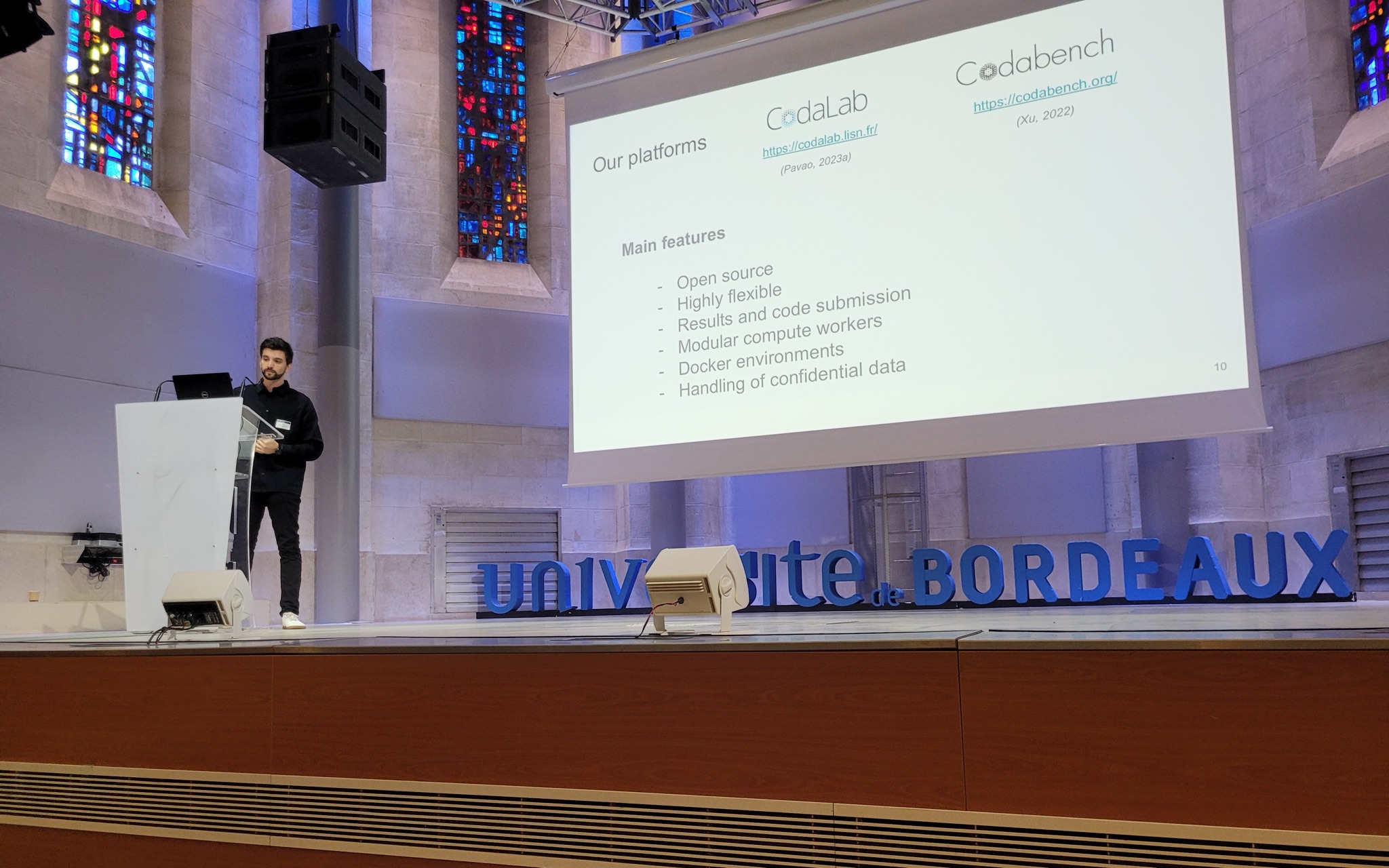
Presenting Codabench at Université de Bordeaux

Our role

Codabench is developed and hosted primarily in France 🇫🇷, at LISN, Université Paris-Saclay, together with the non-profit ChaLearn. Our team has been part of the core contributors throughout the maturation of CodaLab Competitions and then Codabench: platform development, release management, community support, and the design of the evaluation protocols that organizers rely on.

We also deploy and operate dedicated instances of the platform for clients who need their own server, including setups where the evaluation data never leaves the organizer's machines.

Key features

  • Open source: the entire platform code is open source and welcomes contributions, supporting transparent AI evaluation.
  • Containerized environments: Docker and Podman isolate test environments, ensuring reproducibility and simplifying logistics.
  • Decentralized computing: organizers can connect their own compute resources to challenges, making the system fully scalable.
  • Flexibility: organizers provide their own evaluation code, enabling virtually any experimental protocol.
  • Confidential data: organizers retain full control over evaluation data, which never has to be uploaded to the main server.

Impact

Codabench and its predecessor CodaLab rank among the largest global actors in AI competitions, hosting one of the highest numbers of competitions worldwide. Since its official launch in August 2023, the main server counts:

  • 80,000 users
  • 1,500 public competitions
  • Over 700,000 algorithm submissions from participants

Presenting Codabench at Université de Bordeaux Presenting Codabench at Université de Bordeaux

Platform·2024
LLMsPeer ReviewLLM Assistant

NeurIPS Checklist Assistant

Can LLMs help authors meet submission standards?

A study run with the NeurIPS 2024 organizers, to understand whether Large Language Models can serve as an assistant helping authors verify their submission against the NeurIPS Paper Checklist. Participating authors received private feedback on whether their checklist answers matched their paper, then reported back through two short surveys. The assistant was hosted by ChaLearn on Codabench.

With NeurIPS 2024 · ChaLearn

Why this matters

The NeurIPS Paper Checklist is a series of yes/no questions that help authors check if their work meets reproducibility, transparency, and ethical research standards expected for papers at NeurIPS, and is a critical component in maintaining the high standards of research presented at the conference. By ensuring that submissions adhere to this checklist, we uphold the scientific rigor and transparency that NeurIPS aims for.

Currently, some authors might already be using LLMs as tools in their research and writing processes. While the wider ethical implications and appropriate use cases of LLMs remain unclear and must be a larger community discussion, here, we evaluate a more clear-cut and low-risk use case: vetting paper submissions against submission standards, with results shown only to the authors. Our aim is to systematically evaluate the benefits and risks of LLMs, by conducting a structured study to understand if LLMs can enhance research quality and improve efficiency by helping authors understand if their work meets research standards like the NeurIPS Paper Checklist. This study will test the effectiveness of LLMs in an academic publishing setting, and potentially influence broader AI applications in research evaluation.

How It Works

The LLM assistant is hosted by ChaLearn on Codabench.org. We invite NeurIPS authors to try out the assistant for their papers, and fill out two brief surveys.

  • Registration: For any paper, a single delegated author should register at this link. Due to a limited budget, participation will be offered on a first come first served basis. Registered participants will receive an invitation to the assistant's page on the Codabench platform, and will need to create an account on Codabench using the email supplied in the registration.
  • Submissions: Submissions are entirely optional and completely separate from the NeurIPS paper submission system and the review process. Papers must be formatted as specified in the NeurIPS'24 CFP (complete with appendices and checklist). Information provided in external links will not be taken into account by the assistant. We ask submitters to fill out the checklist to the best of their abilities.
  • Anonymity and confidentiality: Authors can retain their anonymity by registering to Codabench with an email and login that do not reveal their identity, and by submitting anonymized papers. The papers and LLM outputs will be kept confidential and will not be accessible to NeurIPS reviewers, ACs, and PCs. Only aggregated statistics will be published, after the review process is over. It is important to note that while authors retain ownership of their submissions, the papers will be sent to the API of an LLM service, and treated under their conditions of confidentiality.

The Role of the Assistant

The LLM Assistant will provide detailed feedback on whether the responses to the checklist questions accompanying the paper are satisfactory. This feedback is intended to guide authors in refining their papers before official submission. Please remember that this tool is designed to supplement, not replace, critical judgment and expertise. In particular, it is certainly possible for the review process to raise concerns about the checklist that have not been raised by the LLM reviews.

Here are some examples of feedback (for two different papers). Green means that the LLM assistant has identified no significant concerns. Yellow means that the LLM assistant has identified an inconsistency with NeurIPS Paper Checklist standards, and authors are encouraged to validate the issue identified by the LLM assistant and make any necessary improvements.

Question #3: For each theoretical result, does the paper provide the full set of assumptions and a complete (and correct) proof?

Author's answer: No

Author's justification: There is no theory in this paper.

LLM Review: The answer provided by the authors is consistent with the content of the paper. Based on the detailed review of the paper, it is clear that the work primarily focuses on conducting an observational study to investigate the presence of citation bias in peer review processes. The study utilizes statistical modeling and analysis rather than theoretical developments that would involve theorems, lemmas, or formal proofs. Therefore, the classification of the answer as "NA" (Not Applicable) is accurate given the nature of the research presented. However, to provide constructive and actionable suggestions for improvement and to ensure thorough and critical assessment, it is beneficial to clearly outline the assumptions behind the statistical models and analyses employed. This would enhance the readability and understandability of the study's methodology and its limitations. [...]


Question #12: Are the creators or original owners of assets (e.g., code, data, models), used in the paper, properly credited and are the license and terms of use explicitly mentioned and properly respected?

Author's answer: Yes.

Author's justification: We have used algorithms such as TPMS and PeerReview4All. We have cited them.

LLM Review: There does not appear to be any discrepancy between the authors' justification for the cited question and the actual paper content in terms of providing proper credit and mentioning licenses for used assets, according to their statement. However, the detailed source citations such as the specific papers for TPMS (Toronto Paper Matching System) and PeerReview4All, including their licenses or terms of use, are not explicitly mentioned in the provided text. It's essential to ensure that these aspects are clearly attributed and any terms of use are respected, as stated in the initial guidelines provided to authors. [...]

Limitations, Disclaimer and Final Thoughts

Despite advances in AI, LLMs still face several limitations when used in verifying scientific submissions. LLMs may misinterpret complex content or fail to fully assess checklist criteria, leading to verification errors. There is also a risk that authors might rely too much on the LLM analysis, potentially missing deeper issues that require human judgment. We encourage authors to manually validate the outputs of LLMs, and to use the tool to supplement their judgment, not replace it. Known issues include false positives (e.g., LLM may ask for extra justifications or changes that are excessive or irrelevant) as well as false negatives (e.g., the LLM overlooks errors in proofs). As of the release of this blog, the LLM answers are based only on the text of the paper and does not check figures, tables, and external links (such as Github repos), hence it may complain about missing information that is found in those assets.

Additionally, using LLMs raises concerns about data privacy and security, as papers are processed through an LLM service API. We provide recommendations to participants on anonymizing their submissions and we are making best efforts to keep all papers in confidence. However, we decline responsibility on possible unintentional leaks of data, due to mishandling or due to the use of a third party LLM. If authors are concerned for the security of their paper, we do not recommend them to participate in the study.

Limited computational resources mean only some authors can access this service, possibly creating unequal opportunities. Furthermore, inherent biases in LLMs could compromise the fairness and impartiality of the process, especially for unconventional or interdisciplinary research. We mitigate these risks by only providing this tool to authors with the intention of feedback: the outputs of the LLM will not be visible to, or used by reviewers, ACs, and PCs in their review of the submission.

This study is strictly for educational and research purposes. The organizers, sponsors, and NeurIPS assume no liability for any direct or indirect consequences arising from participation. Authors are reminded to use their discretion and adhere to all NeurIPS guidelines when submitting their papers to OpenReview for official review.

Credits

The principal organizers of this experiment are: Ihsan Ullah, Alexander Goldberg, Isabelle Guyon, Thanh Gia Hieu Khuong, Benedictus Kent Rachmat, Nihar Shah, and Zhen Xu.

In preparing this experiment, we received advice and help from many people. We are particularly grateful to the NeurIPS'24 organizers, including General Chair Amir Globerson, Program Chairs Danielle Belgrave, Cheng Zhang, Angela Fan, Jakub Tomczak, Ulrich Paquet, and workflow team member Babak Rahmani, for participating in brainstorming discussions and contributing to the design. We have also received inputs and encouragement from Andrew McCallum of OpenReview, Anurag Acharya from Google Scholar, and Tristan Neuman from the NeurIPS board. Several volunteers have contributed ideas and helped with various aspects of the preparation, including Jeremiah Liu, Lisheng Sun, Paulo Henrique Couto, Michael Brenner, Neha Nayak Kennard, and Adrien Pavao.

We are grateful to Marc Schoenauer for supporting this effort with an INRIA Google Research grant. We acknowledge the support of ChaLearn and of the ANR Chair of Artificial Intelligence HUMANIA ANR-19-CHIA-0022.

Trusted By

InriaChaLearnGoogleRTEGoogle DeepMindRegion IDFUniversité Paris-SaclayDassault AviationEDFRPI

Have a project in mind?

Get in touch and let's make it happen.

Get in Touch